HOF Episode 6: Lands of the Nile (Egypt)

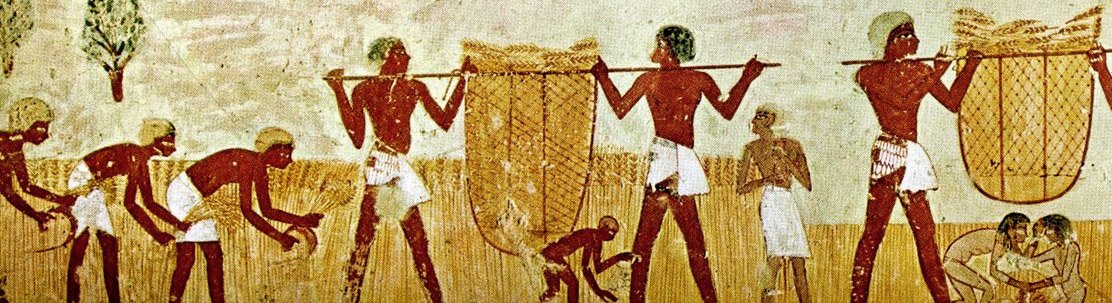
Egypt needs no introduction.  But here’s one anyway! The ancient people along the Nile built a civilization out of grain like Mesopotamia, but diverged on their own unique path, transforming their food surplus into the greatest monuments the world has ever seen.  An overview of Ancient Egyptian history in its entirety, through the lens of food and cooking.

Music by Michael Levy of Ancient Lyre. His original composition “Awe of the Aten” and the whole album The Ancient Egyptian Harp and much more are available from all major digital music stores and streaming sites.

AVAILABLE ON ITUNES.
Please leave a review to help spread the word!

BIBLIOGRAPHY

Continue reading “HOF Episode 6: Lands of the Nile (Egypt)”

Boiled Boar Dinner and Lentil Salad

Simple and hearty today. We’re going back for a taste of the  ancient Near East.

Thanks to the famous Greek historian Herodotus, most anthropologists believed that Egyptians avoided pork either for religion or out of disgust, but evidence has shown that first wild boar, and then domesticated pig as well as their fat as a cooking medium  were consumed regularly up until the New Kingdom. In this late period, when a rising sort of middle class could afford to eat pork, the elites may have shunned it to distinguish themselves. After that, pigs were considered a lower class food.

We’re tracing Egypt from the very beginning, so for this dish I’m gonna say pigs are not yet domesticated. Luckily, I’ve got the shoulder of a wild boar. Boar is interesting. It cooks like pig but will remind you more of beef than of pork.

Why boil it all? Well first off, it’ll really be more of a heavy simmer. But the long cook time needed to make pork shoulder tender will work well with a lot of liquid, keeping the meat nice and juicy and forming a flavorful broth in the process.  Secondly, pottery changed cooking in the Neolithic. Pottage, or soups and stews, were very popular all over the Near East.  Even though we’re using this recipe to kick off History of Food’s Egypt episode, this is a dish you could probably find all over the fertile crescent and beyond.  Anywhere there was wild boar to be domesticated, and pots invented to cook it in.

Continue reading “Boiled Boar Dinner and Lentil Salad”

Grilled”Anchovies” and Roots (Simple Andean Supper )

A very simple recipe to kick off our month of ancient Andean recipes.  This invented meal is composed of some of the kinds of ingredients the Norte Chico, first civilization of South America on the coasts of Peru, might have had available for a hearty supper.

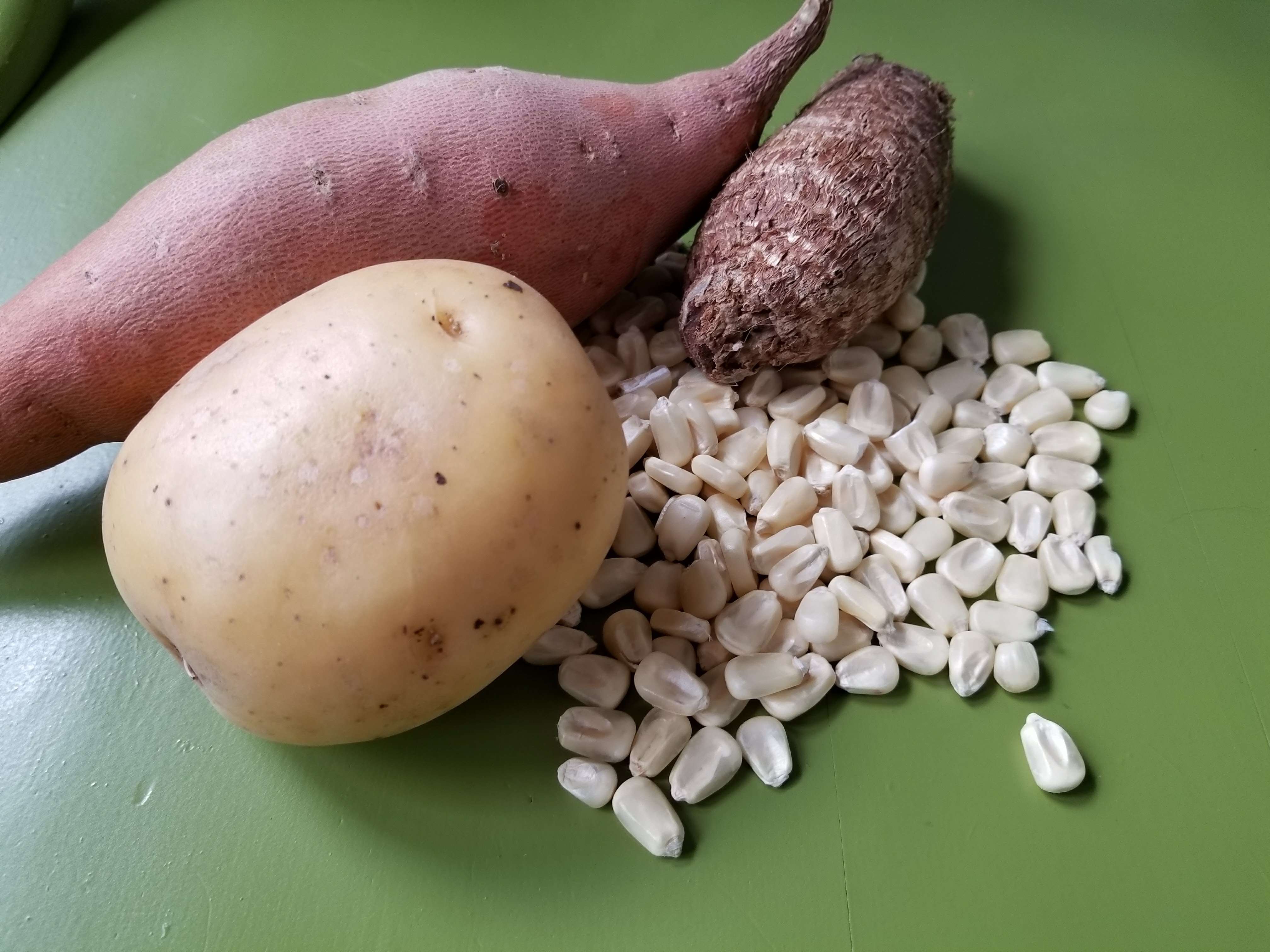
20180222_144414.jpgPotato, Sweet Potato, Edo, and corn (not yet cooked)

The people living at Norte Chico in modern Peru got most of their direct food from the ocean, but they also traded that surplus of marine life for a very diverse rest of the diet. Up in the mid and highlands of the Andes, all kinds of foods were being cultivated and domesticated.

There are so many unique roots to South America that I just can’t get my hands on, but I’ve got some domestic versions of some of the main ones.  Potato, sweet potato, and any other starchy root like Cassava, Malanga, or Edo. Continue reading “Grilled”Anchovies” and Roots (Simple Andean Supper )”

HOF Episode 5: Un Otro Mundo (Andean Civilization)

Sumer was the oldest urban civilization, but not by much.  Second place followed quickly, and incredibly was across the ocean in South America.

People on the coast of modern Peru kickstarted a multi-millennium wave of Andean civilization, passing down a legacy of culture, religion, and cuisine all the way down to the Incas, and do so with methods that will turn everything anthropologists thought they knew about civilization on its head.

We’ve neglected the Andeans thus far, but no longer. It’s time to take a closer look.

AVAILABLE ON SOUNDCLOUD AND ITUNES.
Please leave a review to help spread the word!

Continue reading “HOF Episode 5: Un Otro Mundo (Andean Civilization)”

Sumerian Sweets Table

In an effort to please their gods, the ancient Sumerians, first people to build urban civilization, invented professional cooking and high cuisine.  Cities’ patron deities were literally fed four lavish meals with multiple courses every day.

It’s not clear if they yet had a concept of “dessert” as its own special part of a meal, but fruit, nuts, pastries, confections, and other items sweetened with “honey” (what the Sumerians called date syrup) were definitely consumed at least as part of the overall meal.

As we’ve mentioned before, cane sugar was unheard of in the old world.  That means these desserts, while still rich and satisfying for a sweet tooth’s craiving, derive all that sweetness from fruit, particularly dates.  That means this entire  plate has ZERO ADDED SUGAR, and is as healthy a dessert as you can get, short of just eating plain fruit.

So that’s what we’re doing today.  This recipe post is actually several recipes in one, as we attempt to construct an authentic Sumerian sweets table, fit for a god or goddess. We’ll be making Mersu (date and pistachio bites), Sesame date buns, Palace Cake, Date and Barley porridge, and a Yogurt Lassi to wash it all down.

To get started, let’s make some homemade raisins.

Continue reading “Sumerian Sweets Table”

Sumerian Onion Bread (for gods or royalty)

No peasant fare today.  This bread is for deities or royalty only.

We know the Sumerians, original urban culture of the world, were obsessed with many types of onions, especially leeks.  We also know that temple priests took great care to prepare special food for their resident god or goddess. Most people used flour that was pretty coarse compared to modern ones, but it’s likely that the finest, and most finely ground, sieved, and combed through flour would go into bread made for Enlil or Inanna, presented by priests at four lavish meals per day, every day.

20180126_125309.jpg

This recipe, which is a modern invention, simulates a bread that was fit for the gods by incorporating all-purpose, wheat, and barley flours together with cooked leeks and green onions.  The technique is similar to how Chinese style scallion pancakes are made, but this bread uses a leavened dough and is cooked in pork fat, as the Sumerians loved to do.

(Makes 6 flatbreads)
1.5 cups all-purpose flour
1 cup barley flour
1/2 cup whole wheat flour
1/2 tablespoon (or 1 packet) of yeast
2 teaspoons salt
1.5 cups warm water
1 bunch leeks, sliced
2 bunches spring onions or scallions, sliced
4 tbsp. butter
3-6 thinly sliced strips pork belly (or bacon)

Start by making the dough. Add the yeast to the warm water and let activate for 5-10 minutes. Meanwhile, mix your flours and salt, then combine into a loose dough. Turn onto a surface coated with flour and knead for 10 minutes, until smooth and stretchable.


Continue reading “Sumerian Onion Bread (for gods or royalty)”

Ancient Honey (date) Mustard

“Mustard is a plant. Mustard is an herb. Mustard is a condiment. Mustard is a sauce. Mustard is a green leafy vegetable. Mustard is a natural medicine.”
—via foodtimeline.org, Oxford Companion to Food, Alan Davidson [Oxford University Press:Oxford] 1999

Mustard is not only my favorite condiment, in all its forms. It is the original condiment. Ground wild mustard seed paste goes back far into prehistory. We can’t even say who or when it was invented.

We do know it was popular with the Sumerians and their descendents, covered in HISTORY OF FOOD EPISODE 4: How to Turn Food into Wealth.  Mustard was used for both its seeds and its leaves, and is referenced in multiple cuneiform texts.

This is my version of a sweet and spicy ancient honey mustard, using dates and their syrup as the sweetener and nothing else but mustard seeds and vinegar.  But you can use any combination of seeds, greens, other spices, herbs, or milk can make your own favorite mustard.

For Pickled Mustard Seeds:
1/2 cup mixed mustard seeds
2 cups vinegar, boiled

Pour the boiling vinegar over the mustard seeds and let sit and room temperature for 24 hours.


For dry mix:
1/2 cup mixed mustard seeds
2 teaspoons salt Continue reading “Ancient Honey (date) Mustard”

HOF Episode 4: How to Turn Food into Wealth (Sumer)

We’ve done it. We’ve finally crossed into the realm of written records and recorded history.  Join me on an odyssey going back 6,000 years ago, when the Sumerians of what is today southern Iraq, took a mega-surplus of grain and transformed it directly into wealth and power.  In the process, they managed to invent cities, urbanism, and all the trappings modern civilization. (Not to mention the first written recipes and cookbooks)

Theme music by the incredible Michael Levy of Ancient Lyre. This rendition of the Hurian Hymn, the oldest known piece of sheet music, and the whole album “An Ancient Lyre” and much more is available from all major digital music stores and streaming sites.

AVAILABLE ON SOUNDCLOUD AND ITUNES.
Please leave a review to help spread the word!

(Fun note: this is the era and society that produced the banner art for this website, a royal banquet in Mesopotamia)

Continue reading “HOF Episode 4: How to Turn Food into Wealth (Sumer)”

Fertile Crescent Multi-grain Bread

When times were tough in the ancient world, those dependent on their primitive farms might have come up short on their preferred grains for bread and would have been forced to add other flours to the mix.  For the vast swath of commoners across ancient Mesopotamia, from modern Iran, Iraq, Syria, Turkey, and Mediterranean coast, this hearty multi-grain bread was actually healthier, though nobody knew it at the time.

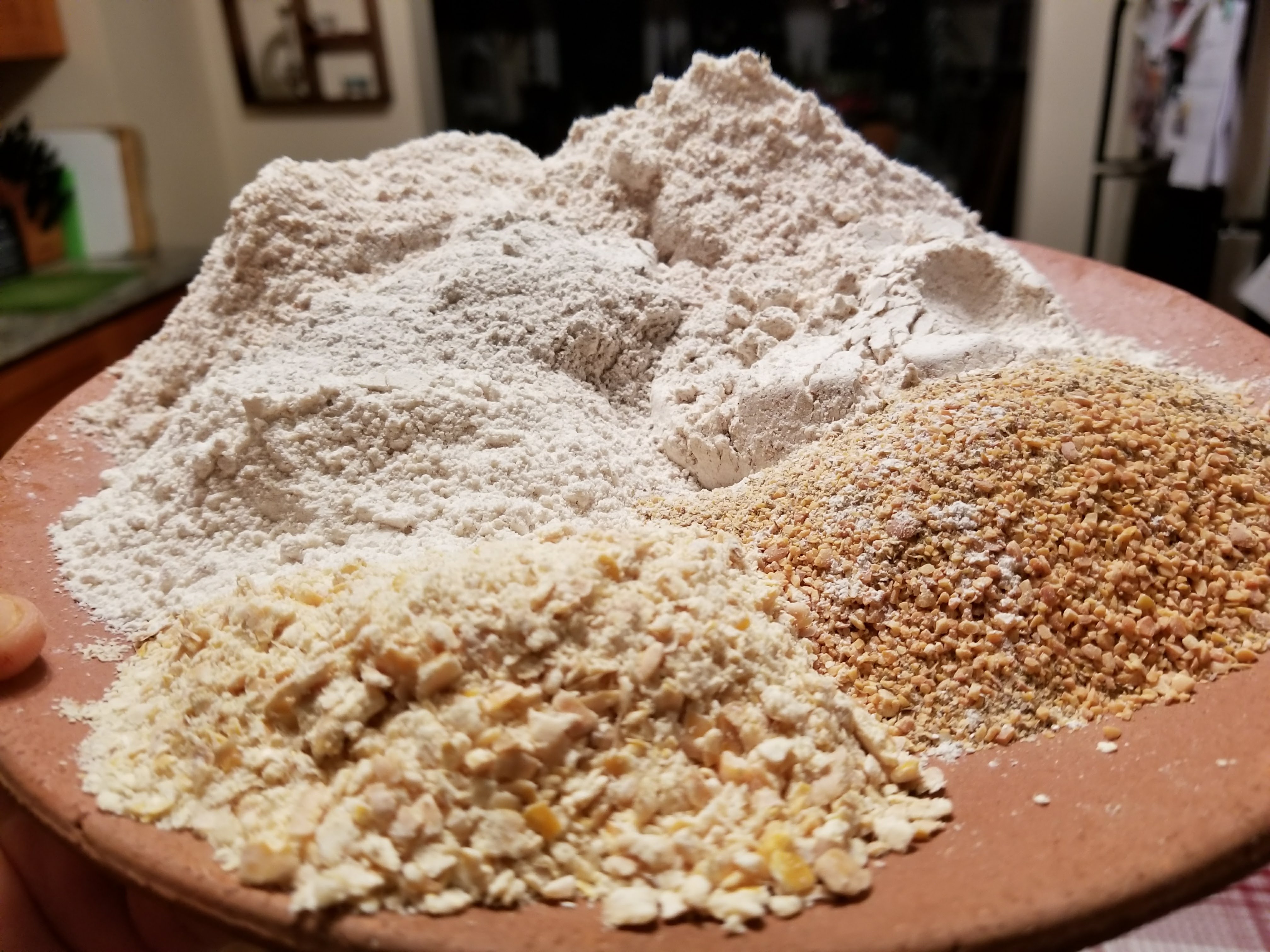
This bread is made from grains that could be found all over the middle east in 5000 BC. The cultivated wheat and barley, with lentils and chickpeas from the garden, and spelt and rye foraged in the wilderness around the village.

20171230_174356.jpg

Like NATUFIAN BARLEY BREAD and MODERN ASH BREAD this is another experiment that allows us to really appreciate the miracle of leavened bread. We’re gonna make this two ways, a leavened sourdough loaf with the knowledge of modern cooking technique, and a cracker like version that’s probably more accurate for what an average peasant had to make do with from time to time. Continue reading “Fertile Crescent Multi-grain Bread”

Mesoamerican Blackbean Tamales with Chili Sauce

Spicy. Simple. Delicious.

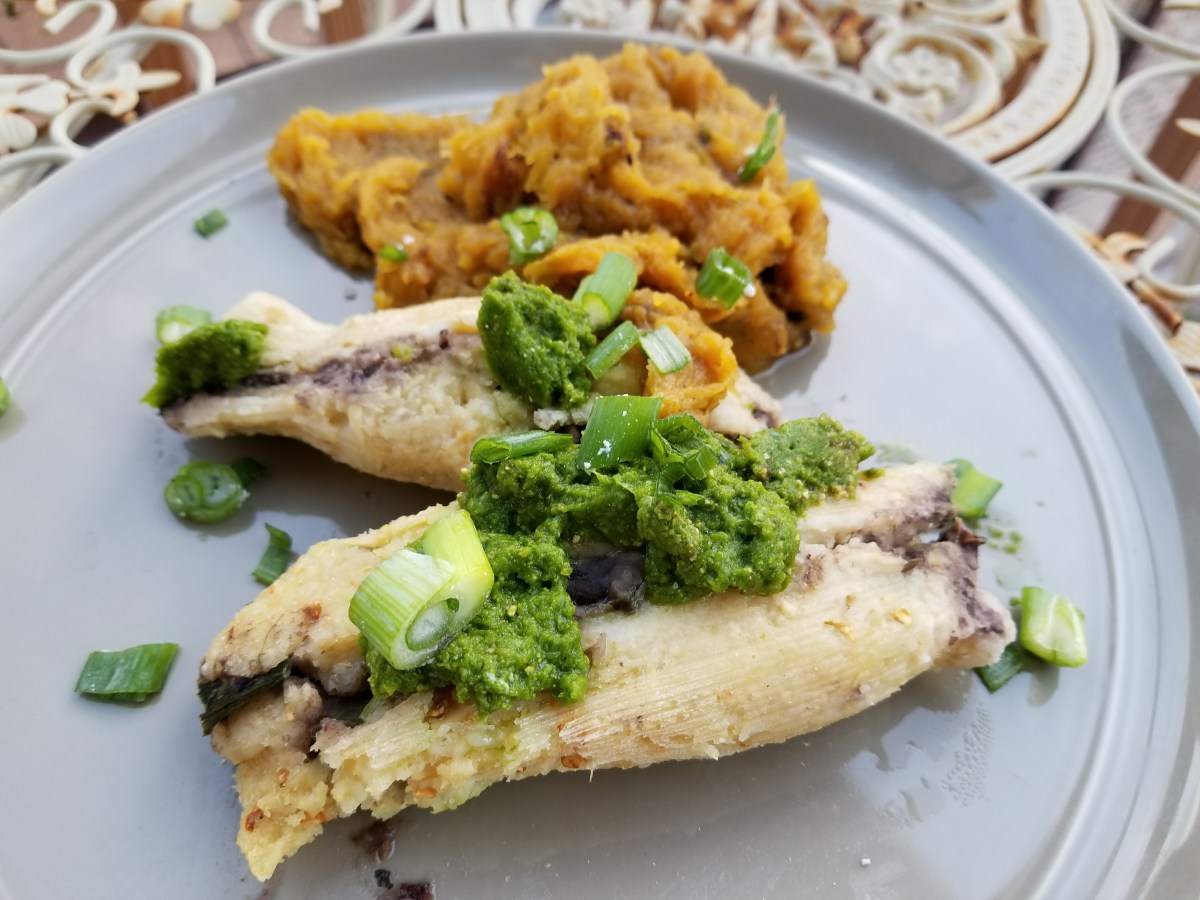
To accompany the Mesoamerican section of episode 3 of the History of Food, we’re making authentic ancient tamales in the earth oven, just like would have been done in pre-urban Mexico and Guatemala.

These tamales are a little plain, and lack the fat and leavening agents that help make modern tamales so delicious. We’re making ours with only the ingredients the ancient Mesoamericans had, that is with corn, lime, and water.

But that’s okay, we’ve got some other authentic ingredients to help the flavor along.  Black beans for filling, and chili sauce for garnish, and roasted squash as a side are going to give us flavor and depth, even if the tamale itself is bare bones.

Sweetcorn or Popcorn won’t work. You need plain field corn for this, which in some areas can be hard to come by.  You can find it in many Mexican markets, almost any tortilleria, or if you’re truly lucky, a farmer.

For the tamales:
400g Plain Field corn (NOT sweet or popcorn)
6g Cal (pickling lime)
5 cups water
Dried corn husks for wrapping the tamales

For the Black bean filling:
3/4 cup dry black beans

5 cups water
1 fresh chile
1 medium onion

For the Chili sauce:
6-7 fresh chiles
Seeds from 1 squash or pumpkin
water

20171031_095428.jpg
20171031_100404.jpg Continue reading “Mesoamerican Blackbean Tamales with Chili Sauce”