Octopus Salad

This is classic Ancient Greece. Though not necessarily limited to  classical Ancient Greece.

From the earliest Neolithic settlers, up until the present day really, Octopus Salad represents an Aegean staple.

20180413_100812.jpg

This is the ancient version, lacking citrus and using ingredients representative of the ingredients that were available.  The simplest rendition of this is just cold octopus chopped up and tossed in olive oil.  You don’t need more than that, but by adding barley, onions, garlic, greens, and fish sauce, tied with mustard for favorite ancient condiment of the world, we can really build up the flavor. Continue reading “Octopus Salad”

HOF Episode 7: Age of the Aegean (Greece)

Here we are at last, on the shores of Greece.

It’s a brief retelling of Aegean history, a story you’ve heard before, though perhaps not from a chef’s point of view.  Come for the history, stay for the foods that made them special.  By mastering the sea, the olive, and the grape vine, the Greeks found their own winds toward civilization.

Music by Michael Levy of Ancient Lyre. His original composition “Plato’s Symposium” and the whole album The Ancient Greek Tortoise Shell Lyre and much more are available from all major digital music stores and streaming sites.

AVAILABLE ON ITUNES and GOOGLE PLAY.
Please leave a review to help spread the word!

Continue reading “HOF Episode 7: Age of the Aegean (Greece)”

No Knead Sourdough (in terracotta molds)

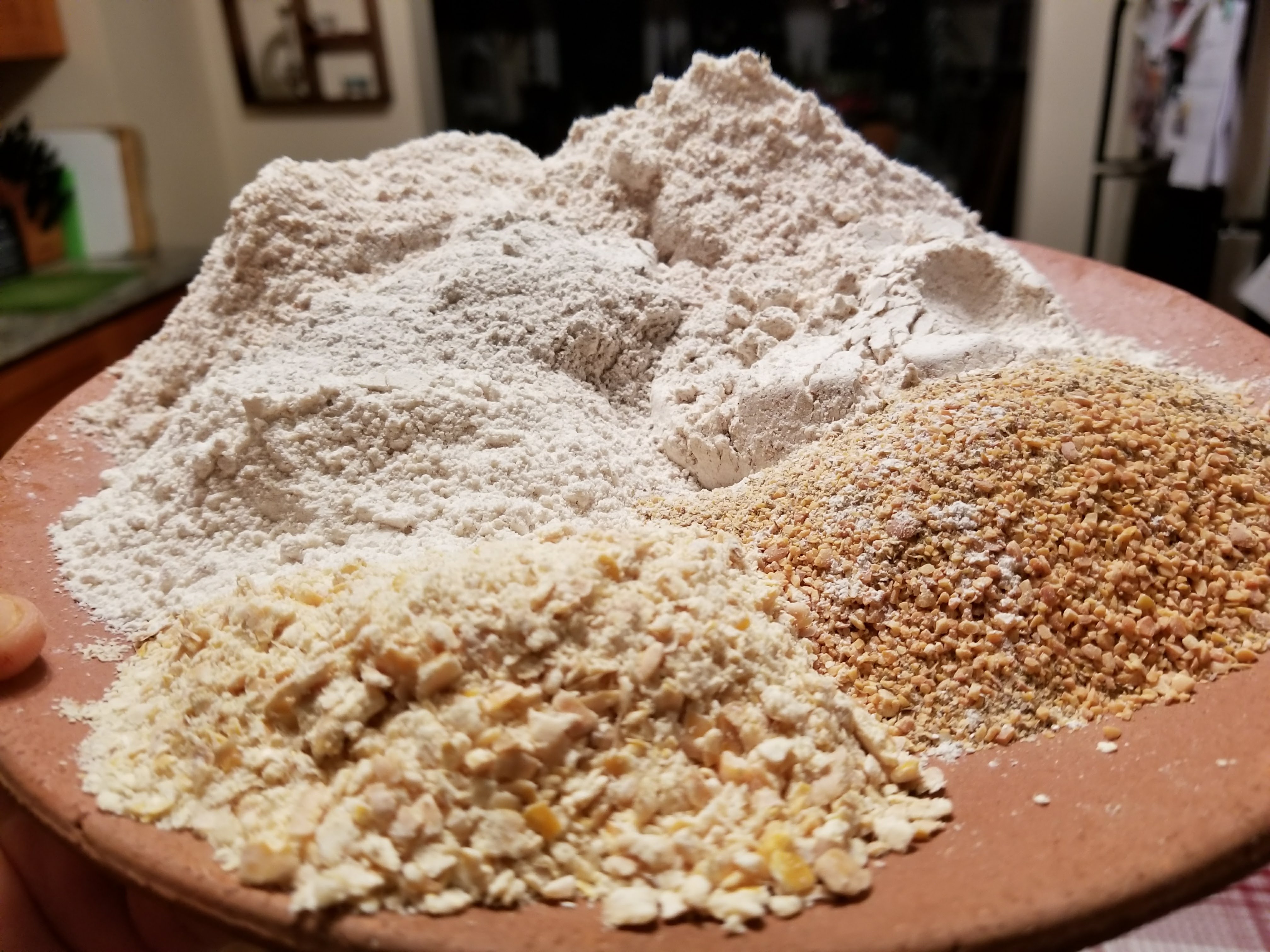
The Egyptians were known to bake their breads into all kinds of shapes, from triangles to the more elaborate.     We’re gonna keep it simple today, and use a clean Terracotta flower pot to bake bread.

Did I mention today’s recipe is no knead?  No, you don’t need to knead if you have a lot of time to spare. 24 hours in fact. This bread “rises” for a whole day, developing gluten content and a great, sour flavor in a heavily fermented dough.

With a recipe like this, you can understand why the rise of fermented bread goes hand in hand with large scale breweries.  To make this loaf, you’re basically making a beer mash, and then baking it instead of brewing it.  Beer and bread go hand and hand, and nobody knew that better than the Ancient Egyptians.

Thanks to Kathy Caufman’s “Cooking in Ancient Civilizations” for the terracotta method and the idea of using wheat and semolina flour to make a coarse, kind of imitation ancient flour.

20180413_094344.jpg Continue reading “No Knead Sourdough (in terracotta molds)”

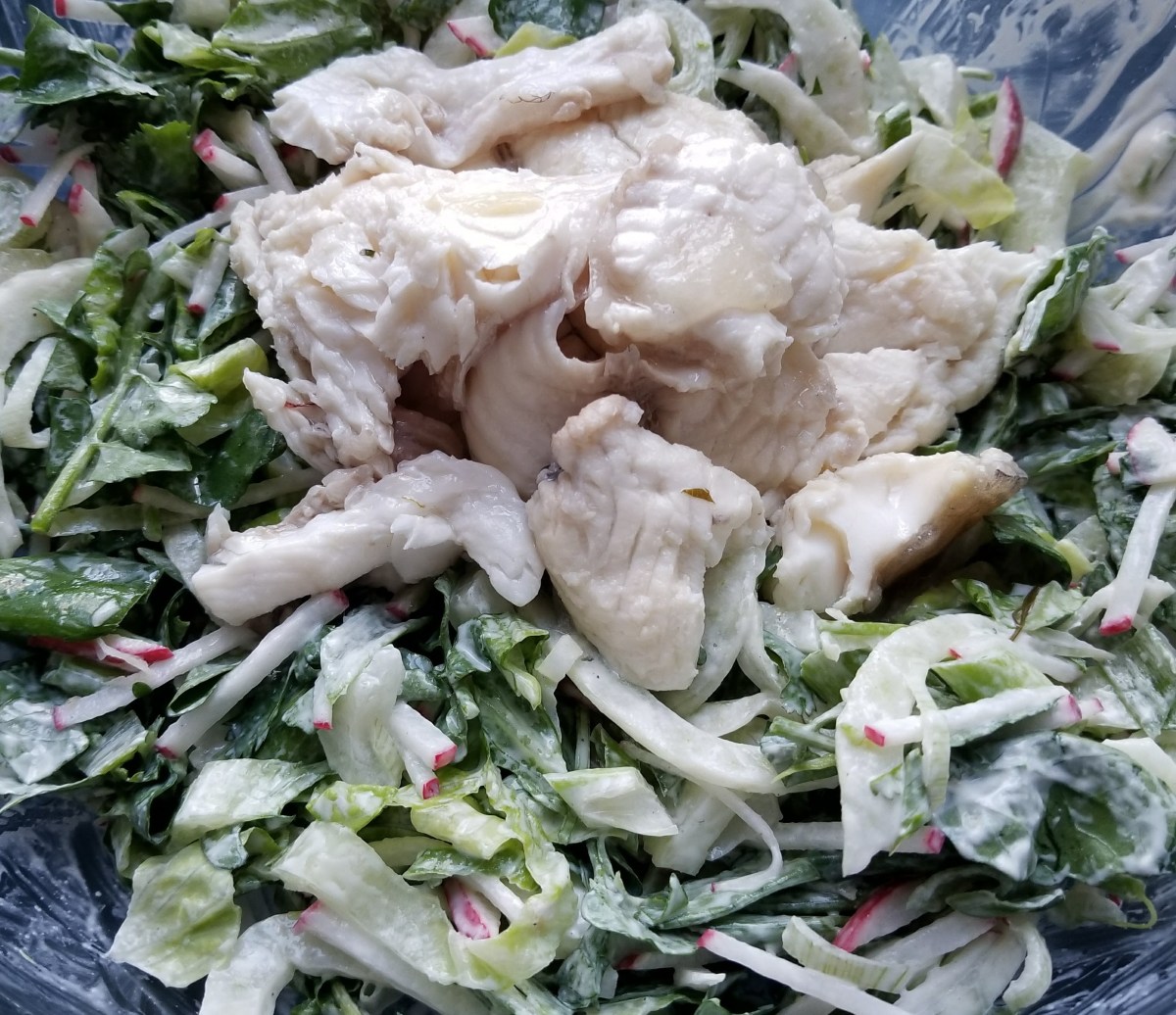
Quick-Pickled Fish and Chopped Salad

Here we have a dish that is inspired by Egypt, but  is not an actual Egyptian recipe.  There are no Egyptian recipes. They either didn’t write any, or we haven’t found them.

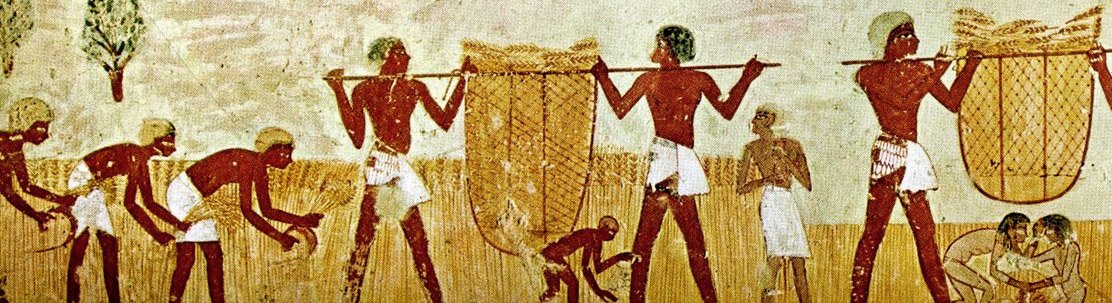
But through paintings, textual references, and actual meals left behind for archeologists to discover, we can still infer a lot about Ancient Egyptian cuisine.

River fish, particularly mullet, was probably important for rich and poor alike, and Egyptian morticians/chefs worked together to discover the secrets of pickling both food and corpses.  Pickled fish not only allowed for preservation of a natural resource, it was considered quite a delicacy.

This fish is what I’m calling “Quick pickled.” It’s really more of a poached fish, but by doing it in vinegar you can achieve a mild, not too intense pickle flavor that make the fish a nice topper for salads or other cold sides. Continue reading “Quick-Pickled Fish and Chopped Salad”

HOF Episode 6: Lands of the Nile (Egypt)

Egypt needs no introduction.  But here’s one anyway! The ancient people along the Nile built a civilization out of grain like Mesopotamia, but diverged on their own unique path, transforming their food surplus into the greatest monuments the world has ever seen.  An overview of Ancient Egyptian history in its entirety, through the lens of food and cooking.

Music by Michael Levy of Ancient Lyre. His original composition “Awe of the Aten” and the whole album The Ancient Egyptian Harp and much more are available from all major digital music stores and streaming sites.

AVAILABLE ON ITUNES.
Please leave a review to help spread the word!

BIBLIOGRAPHY

Continue reading “HOF Episode 6: Lands of the Nile (Egypt)”

Boiled Boar Dinner and Lentil Salad

Simple and hearty today. We’re going back for a taste of the  ancient Near East.

Thanks to the famous Greek historian Herodotus, most anthropologists believed that Egyptians avoided pork either for religion or out of disgust, but evidence has shown that first wild boar, and then domesticated pig as well as their fat as a cooking medium  were consumed regularly up until the New Kingdom. In this late period, when a rising sort of middle class could afford to eat pork, the elites may have shunned it to distinguish themselves. After that, pigs were considered a lower class food.

We’re tracing Egypt from the very beginning, so for this dish I’m gonna say pigs are not yet domesticated. Luckily, I’ve got the shoulder of a wild boar. Boar is interesting. It cooks like pig but will remind you more of beef than of pork.

Why boil it all? Well first off, it’ll really be more of a heavy simmer. But the long cook time needed to make pork shoulder tender will work well with a lot of liquid, keeping the meat nice and juicy and forming a flavorful broth in the process.  Secondly, pottery changed cooking in the Neolithic. Pottage, or soups and stews, were very popular all over the Near East.  Even though we’re using this recipe to kick off History of Food’s Egypt episode, this is a dish you could probably find all over the fertile crescent and beyond.  Anywhere there was wild boar to be domesticated, and pots invented to cook it in.

Continue reading “Boiled Boar Dinner and Lentil Salad”

HOF Episode 5: Un Otro Mundo (Andean Civilization)

Sumer was the oldest urban civilization, but not by much.  Second place followed quickly, and incredibly was across the ocean in South America.

People on the coast of modern Peru kickstarted a multi-millennium wave of Andean civilization, passing down a legacy of culture, religion, and cuisine all the way down to the Incas, and do so with methods that will turn everything anthropologists thought they knew about civilization on its head.

We’ve neglected the Andeans thus far, but no longer. It’s time to take a closer look.

AVAILABLE ON SOUNDCLOUD AND ITUNES.
Please leave a review to help spread the word!

Continue reading “HOF Episode 5: Un Otro Mundo (Andean Civilization)”

Sumerian Onion Bread (for gods or royalty)

No peasant fare today.  This bread is for deities or royalty only.

We know the Sumerians, original urban culture of the world, were obsessed with many types of onions, especially leeks.  We also know that temple priests took great care to prepare special food for their resident god or goddess. Most people used flour that was pretty coarse compared to modern ones, but it’s likely that the finest, and most finely ground, sieved, and combed through flour would go into bread made for Enlil or Inanna, presented by priests at four lavish meals per day, every day.

20180126_125309.jpg

This recipe, which is a modern invention, simulates a bread that was fit for the gods by incorporating all-purpose, wheat, and barley flours together with cooked leeks and green onions.  The technique is similar to how Chinese style scallion pancakes are made, but this bread uses a leavened dough and is cooked in pork fat, as the Sumerians loved to do.

(Makes 6 flatbreads)
1.5 cups all-purpose flour
1 cup barley flour
1/2 cup whole wheat flour
1/2 tablespoon (or 1 packet) of yeast
2 teaspoons salt
1.5 cups warm water
1 bunch leeks, sliced
2 bunches spring onions or scallions, sliced
4 tbsp. butter
3-6 thinly sliced strips pork belly (or bacon)

Start by making the dough. Add the yeast to the warm water and let activate for 5-10 minutes. Meanwhile, mix your flours and salt, then combine into a loose dough. Turn onto a surface coated with flour and knead for 10 minutes, until smooth and stretchable.


Continue reading “Sumerian Onion Bread (for gods or royalty)”

Sumerian Beer

Our first real recipe from history. . . why not for a beverage?

The discovery of beer goes far back into Neolithic times. It’s reasonable to assume that the first beers were made by accident, when porridge or mash from grain malted for other purposes was left too long for whatever reason, and fermented.

Thus by the 2000sBC and the rise of  Mesopotamian civilization, people were already proficient brewers.  Sumerian texts mention eight barley beers, eight emmer beers and three mixed beers (one of which we’ll be making today) This special beverage was made from the same grains which the Sumerians were well aware how important it was to their civilization. As such, brewing was sacred, serious business.

The Hymn to the goddess of brewing Ninkasi, from around 1800BC at the peak of Sumerian culture, not only shows the peoples’ reverence and awe at this fermented beverage, but also contains a recipe for how to make the stuff! Modern brewers have taken the instructions and recreated this ancient recipe for barley and wheat beer, which Cathy K. Kaufman handily publishes in her great book Cooking in Ancient Civilizations.

The basic method is to malt some wheat berries, then soak them with water, yeast, date-syrup, and a par cooked, fermented loaf of barley dough.  The whole process takes about a week and yields a mild, pale brew that’s only 2% alcohol and doesn’t quite taste like what you’re used to in modern beers.

But it’s not unpleasant!  And it does the job. I would compare the flavor more to cider than to beer. Barley cider if you will, but this is a close approximation of the kind of draught which helped build a civilization. Continue reading “Sumerian Beer”

Fertile Crescent Multi-grain Bread

When times were tough in the ancient world, those dependent on their primitive farms might have come up short on their preferred grains for bread and would have been forced to add other flours to the mix.  For the vast swath of commoners across ancient Mesopotamia, from modern Iran, Iraq, Syria, Turkey, and Mediterranean coast, this hearty multi-grain bread was actually healthier, though nobody knew it at the time.

This bread is made from grains that could be found all over the middle east in 5000 BC. The cultivated wheat and barley, with lentils and chickpeas from the garden, and spelt and rye foraged in the wilderness around the village.

20171230_174356.jpg

Like NATUFIAN BARLEY BREAD and MODERN ASH BREAD this is another experiment that allows us to really appreciate the miracle of leavened bread. We’re gonna make this two ways, a leavened sourdough loaf with the knowledge of modern cooking technique, and a cracker like version that’s probably more accurate for what an average peasant had to make do with from time to time. Continue reading “Fertile Crescent Multi-grain Bread”